Edge Cloud Computing: The Future of Real-Time Data Access and Security
Discover how edge cloud computing delivers faster, secure real-time data access by reducing latency, improving performance, enhancing cybersecurity, and supporting AI, IoT, and modern enterprise applications.
Digital Team
Devopstrio Managed Services
Edge Cloud Computing Delivers Faster, Secure Real-Time Data Access
As businesses generate and process massive volumes of data, traditional cloud architectures can face challenges related to latency, bandwidth, and real-time responsiveness. To overcome these limitations, organizations are increasingly adopting Edge Cloud Computing—a modern approach that brings computing power closer to where data is created. By combining the scalability of cloud computing with the speed of edge infrastructure, edge cloud computing enables faster decision-making, improved security, and real-time data access across distributed environments
What Is Edge Cloud Computing?
Edge cloud computing is a distributed computing model that processes data closer to devices, users, and applications rather than relying solely on centralized cloud data centers. Instead of sending every piece of information to a distant cloud server, edge computing allows data to be analyzed and processed near its source. This reduces latency, improves performance, and supports time-sensitive applications. Edge cloud environments are commonly used in:
- Internet of Things (IoT)
- Artificial Intelligence (AI)
- Smart manufacturing
- Autonomous systems
- Retail and e-commerce
- Telecommunications networks
This architecture enables organizations to deliver faster and more reliable digital experiences.
Why Edge Cloud Computing Matters
As modern enterprises demand real-time insights and seamless user experiences, edge cloud computing is becoming a critical technology foundation.
Faster Data Processing
Processing information closer to users significantly reduces latency, enabling near-instant responses and improved application performance.
Enhanced Security
Sensitive data can be processed locally, reducing unnecessary data transfers and strengthening cybersecurity protection.
Real-Time Decision Making
Organizations gain immediate access to operational insights, enabling faster business decisions and automated responses.
Improved Reliability
Edge environments continue operating even when connectivity to central cloud systems is limited or interrupted.
Optimized Network Efficiency
By filtering and processing data at the edge, businesses reduce bandwidth consumption and cloud infrastructure costs.
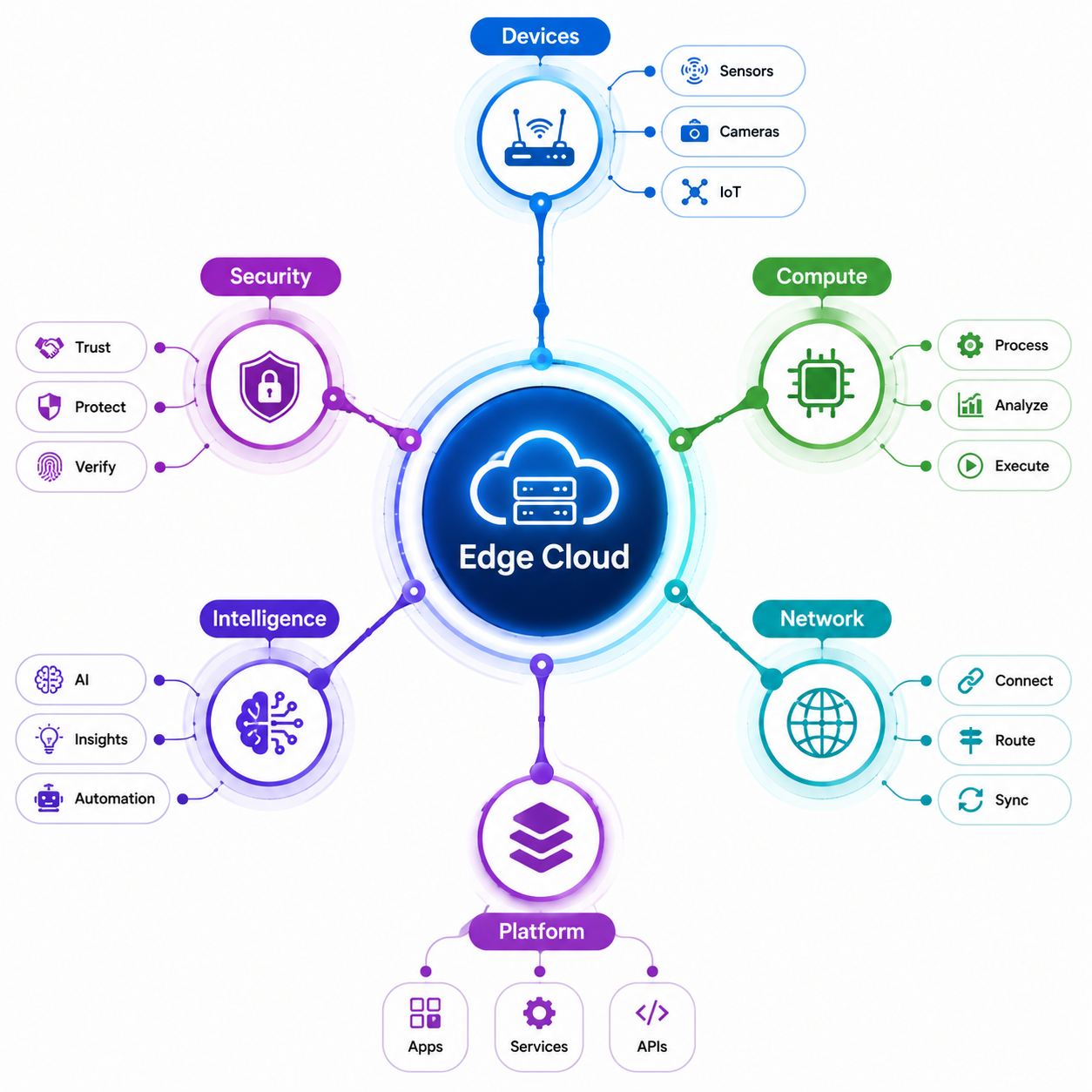
Key Components of an Edge Cloud Architecture
A successful edge cloud strategy combines multiple technologies working together.
Edge Devices
Sensors, IoT devices, cameras, and smart endpoints generate and process data at the network edge.
Edge Servers
Local compute resources perform analytics, application processing, and data management close to end users.
Cloud Integration
Centralized cloud platforms provide orchestration, storage, governance, and large-scale analytics capabilities.
AI and Automation
Artificial intelligence enables intelligent decision-making and automated actions directly at the edge.
Security Frameworks
Modern edge environments incorporate encryption, identity management, and Zero Trust security principles.
Enterprise Use Cases for Edge Cloud Computing
Organizations across industries are leveraging edge cloud technologies to improve performance and operational efficiency.
Smart Manufacturing
Factories use edge computing for predictive maintenance, quality control, and real-time production monitoring.
Healthcare
Medical systems process patient data closer to devices, enabling faster diagnostics and improved patient care.
AI-Powered Applications
Generative AI, computer vision, and intelligent automation platforms benefit from low-latency edge processing.
Transportation and Logistics
Edge infrastructure supports fleet tracking, route optimization, and autonomous vehicle technologies.
The Future of Edge Cloud Computing
As digital transformation accelerates, edge cloud computing is expected to become a core component of enterprise technology strategies. The growth of AI, 5G, IoT, and real-time analytics is driving demand for distributed computing environments that deliver speed, scalability, and resilience. Organizations investing in edge cloud technologies gain:
- Faster application performance
- Enhanced cybersecurity
- Reduced latency
- Greater operational efficiency
- Improved customer experiences
- Scalable digital infrastructure
Conclusion
Edge cloud computing is transforming how businesses process, secure, and access data. By bringing computing resources closer to users and devices, organizations can unlock real-time intelligence, improve operational performance, and create more responsive digital experiences. Businesses that embrace edge cloud strategies today will be better positioned to support AI-driven innovation, accelerate digital transformation, and stay competitive in an increasingly connected world.
Accelerate Digital Innovation with Devopstrio
Devopstrio helps organizations build modern edge cloud infrastructures designed for performance, security, and scalability.
Our Edge & Cloud Services Include:
- Edge Cloud Architecture Design
- Cloud Infrastructure Modernization
- IoT & Edge Computing Solutions
- AI-Powered Edge Deployments
- Kubernetes & Container Platforms
- Security & Compliance Management
Partner with Devopstrio to unlock faster, smarter, and more secure real-time data experiences with edge cloud computing.
Written by Digital Team
Devopstrio Managed Services Practice. Continuous Senior-Level Technology Stewardship, 24/7/365 follow-the-sun cloud infrastructure management, SRE governance, and cybersecurity operations.
Where tech leaders
gather.
Insights & live
engineering briefings.
Subscribe to get
exclusive intelligence
and engineering white papers.
Related Publications
View More in Blogs →
Cybersecurity Services in UK: How Does Digital Protection Work?
Learn about cyber threats and how cloud and DevOps practices help protect business data and systems.
How Can Businesses Make Their Cloud Infrastructure More Reliable?
Learn how cloud monitoring, automation, and DevOps practices help businesses improve infrastructure reliability.

How Can Managed Services Help Growing Businesses?
Discover how managed services simplify IT and support business growth.
Turn These Engineering Insights Into Operational Reality.
Collaborate with Devopstrio principal architects to implement resilient infrastructure patterns, automated deployments, and 24/7 managed support.